Failed bathtub refinishing guide
Peeling Reglazed Tub in Austin? Here's Why It Failed and What to Do Before You Waste More Money
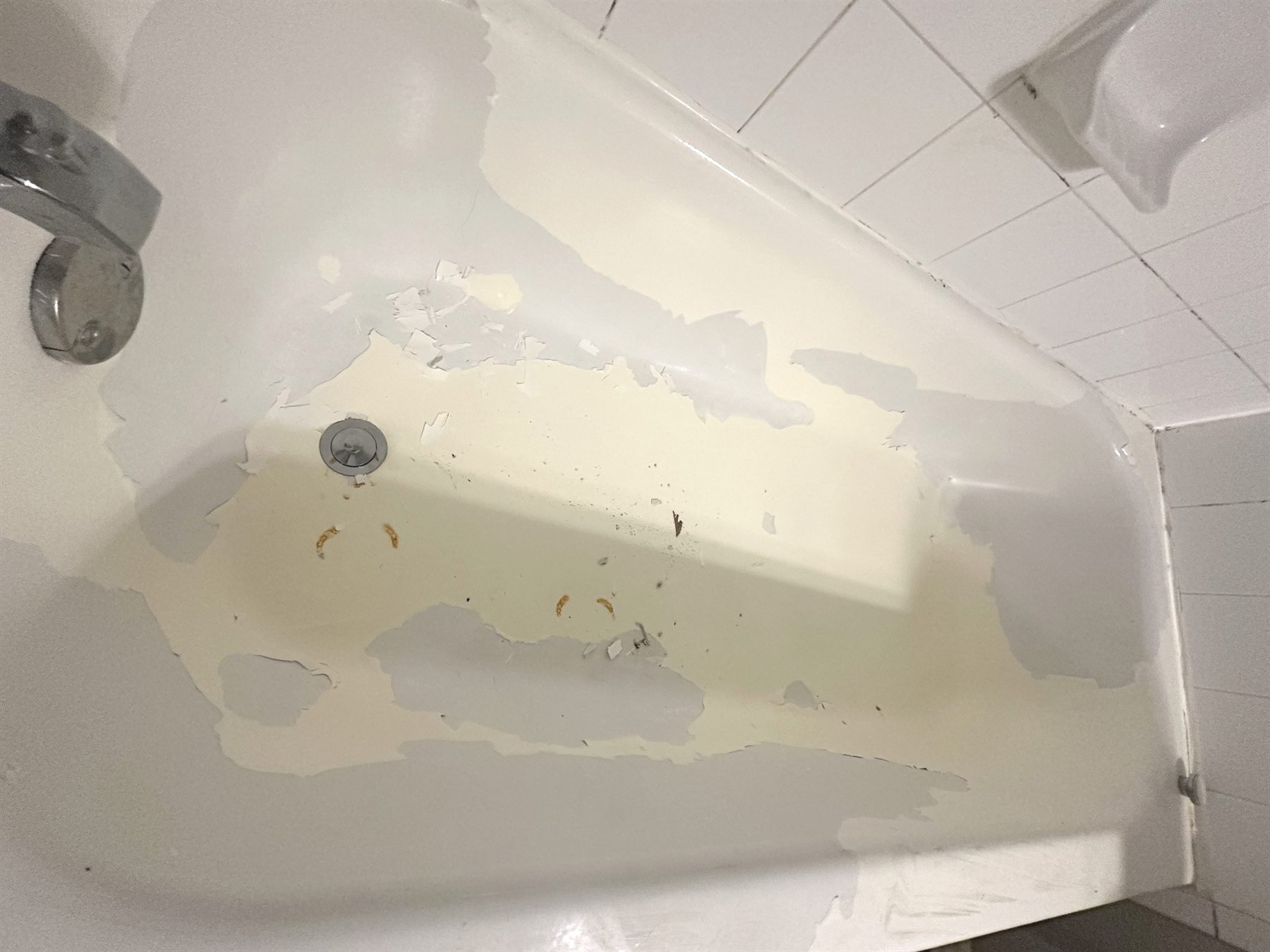
A peeling reglazed tub needs review before another coating is applied over the failing surface.
A peeling bathtub is frustrating because it usually means somebody already paid to fix it once.
Maybe the tub looked good for a while, then the coating started bubbling near the drain. Maybe the bottom of the tub started flaking. Maybe the finish is peeling around the overflow, edges, or caulk line. Maybe the tub now looks worse than it did before it was reglazed.
That is a common problem with failed bathtub refinishing. If you are dealing with a peeling reglazed tub in Austin, the worst move is to cover it with another coating before understanding why the last one failed.
A tub can peel because of poor prep, a cheap DIY kit, moisture, rust, chips, cracks, harsh cleaners, old caulk, soap residue, silicone contamination, or a new coating applied over another failing coating. The important point is simple: a peeling tub needs to be reviewed before it is refinished again.
At Texas Bathtub & Tile Refinishing, we help Austin-area homeowners, real estate agents, property managers, landlords, and renovation companies figure out whether a peeling tub needs stripping, bathtub repair, tub chip repair, tub crack repair, tub rust repair, recaulking, bathtub refinishing, or replacement.
Table of Contents
- The Short Version
- Why a Reglazed Bathtub Starts Peeling
- The Problem With Refinishing Over a Bad Coating
- Common Places Where Bathtub Coatings Fail
- Cheap DIY Kits vs Professional Bathtub Refinishing
- Peeling Tubs in Austin Homes, Rentals, and Listings
- What Needs to Be Checked Before Refinishing Again
- Chips, Cracks, Rust, and Old Caulk Can Make Peeling Worse
- When Stripping May Be Needed
- When Replacement May Be the Better Option
- Austin, Cedar Park, Round Rock, Pflugerville, Manor, and Nearby Service Areas
- Final Quote Checklist
- FAQ
The Short Version
If your reglazed bathtub is peeling, flaking, bubbling, rough, or lifting, the previous coating has failed. That does not automatically mean the tub has to be replaced. It does mean the failed coating needs to be reviewed before another finish is applied.
In many cases, the tub may need stripping, surface prep, bathtub repair, tub chip repair, tub crack repair, tub rust repair, or recaulking before refinishing can be done correctly. The goal is not to keep layering product over the same problem. The goal is to find out why the coating failed and whether the tub is still a good candidate for bathtub refinishing in Austin TX.
For a homeowner, that can save money and frustration. For a realtor, it can help avoid a bathroom issue before listing photos. For a property manager, it can keep a rental bathroom from looking neglected between tenants. For a renovation company, it can help make sure the final bathroom surface matches the rest of the project.
Once peeling starts, water, soap, and cleaning products can keep working under the coating. The longer it sits, the more noticeable it usually becomes.
Why a Reglazed Bathtub Starts Peeling
Bathtub refinishing depends heavily on preparation. The coating is only one part of the job. Before a tub is refinished, the surface has to be cleaned, repaired, prepped, and made ready for bonding. If that prep is rushed or skipped, the new finish may look good at first and then start failing later.
A tub can peel because the surface had residue on it. Old soap film, body oils, cleaning products, silicone, waxes, and previous coatings can all affect bonding. A bathtub can look clean to the eye and still have contamination that causes coating failure.
A tub can also peel because damage was not repaired first. If there were chips, rust spots, cracks, or worn areas, those issues may need bathtub repair in Austin before refinishing. Refinishing over damaged areas without addressing them can lead to weak spots in the finish.
Moisture is another common problem. Bathrooms are wet environments. If water is trapped under a failing coating or if the tub is constantly exposed to standing water, the finish can start lifting. Drain areas are especially vulnerable because they see water, soap, cleaners, and foot traffic over and over again.
Old caulk can also create problems. If caulk lines are failing, dirty, cracked, or pulling away, water can get into areas where it should not be. Recaulking may be part of the refresh when the tub or tile area needs to look clean and sealed around the edges.
The Problem With Refinishing Over a Bad Coating
A peeling reglazed tub is not like a wall that just needs another coat of paint. When a bathtub coating starts lifting, there is a bonding problem. If the weak coating stays on the tub and another coating is applied over it, the new finish may temporarily hide the peeling area, but the old failure can keep spreading underneath.
That is why "just reglaze it again" can be risky. If the existing finish is failing, the tub may need to be stripped or prepped more aggressively before another finish is applied. The exact process depends on how much coating is failing, how many layers are on the tub, what type of tub it is, and whether there are chips, rust, cracks, or other problems under the coating.
A useful surface review should answer a few practical questions:
- Is the peeling isolated or spreading?
- Is there more than one old coating layer?
- Is the tub surface underneath damaged?
- Is there rust near the drain, overflow, or chips?
- Are there cracks or movement in the tub?
- Is old caulk causing edge failure?
- Is the tub a good candidate for refinishing again?
- Does replacement need to be considered?
This is where bathtub repair Austin and bathtub refinishing Austin TX overlap. A failed coating may need both repair and refinishing, not just one or the other.
Common Places Where Bathtub Coatings Fail
Peeling can happen anywhere on a tub, but some areas fail more often than others.
Around the drain
The drain area is one of the most common places for coating failure. It sees standing water, soap, shampoo, cleaners, and constant foot traffic. If the surface was not prepped correctly or rust was already forming near the drain, peeling can start there. Tub rust repair may be needed before another finish is applied, especially on older porcelain, steel, or cast iron tubs.
On the bottom of the tub
The bottom of the tub takes the most abuse. People stand there, water sits there, cleaners are used there, and bath mats are often placed there. If the bottom was not properly prepped or cured, coating failure may show up as flaking, bubbling, rough patches, or peeling sheets.
Around the overflow
The overflow area can collect moisture and soap residue. If the coating did not bond well or if hardware was not handled properly during the previous work, peeling may show up around the overflow plate.
Along the edges and caulk lines
Edges are another common failure point. Old caulk, silicone residue, water intrusion, and poor masking can all cause peeling along the tub-to-tile line. If the caulk is cracked, stained, or pulling away, recaulking may be needed as part of the repair plan.
Near chips, cracks, and impact damage
If a tub had chips before it was refinished and those chips were not repaired correctly, the finish may fail around those areas. Cracks are more serious, especially on fiberglass and acrylic tubs. If the surface moves, a coating over that movement can fail again. Tub chip repair and tub crack repair should be reviewed before another finish goes on.
Cheap DIY Kits vs Professional Bathtub Refinishing
DIY bathtub refinishing kits are easy to find, and they can look attractive when someone wants a cheap fix. The box may make the project seem simple: clean the tub, mix the product, roll or brush it on, let it dry, and enjoy a new-looking bathtub.
The problem is that bathtub refinishing is not just about putting a new color on the surface. The surface has to bond. That means prep, cleaning, residue removal, chip repair, rust handling, ventilation, application, and cure time all matter.
Many DIY failures happen because the tub was not prepared well enough. Some happen because the product was not strong enough for the daily use a bathtub gets. Others happen because the tub was used too soon, cleaned with the wrong products, or coated over hidden residue.
Professional refinishing is not automatic protection from failure either. A poor professional job can fail if the prep is rushed, the wrong materials are used, or the tub is coated over an old failing finish. The better question is not simply DIY or pro. The better question is: what condition is the tub in, and what needs to happen before a new finish goes on?
Peeling Tubs in Austin Homes, Rentals, and Listings
A peeling tub is a problem in any bathroom, but the urgency changes depending on the property.
For a homeowner, it is usually personal. You use the bathroom every day, and the peeling area keeps getting worse. What started as one small bubble becomes a rough patch. Then the tub feels dirty even after cleaning.
For a real estate agent, a peeling tub can become a listing problem. Buyers notice peeling coatings because they look like deferred maintenance. In photos, peeling can make the bathroom look neglected. During showings, buyers may wonder if the tub needs replacement.
For a property manager, a peeling tub can turn into tenant complaints. A tenant may not care what caused the failure; they just see a tub that looks rough. During turnover, a peeling coating can also slow down the make-ready process.
For a renovation company, a peeling old finish can clash with the rest of the work. If new flooring, paint, vanity, fixtures, or lighting are installed but the tub is peeling, the bathroom may still look unfinished.
Whether the project is in Austin, Cedar Park, Round Rock, Pflugerville, Manor, Georgetown, Leander, Buda, San Marcos, or New Braunfels, the same idea applies: find out why the surface failed before paying to refinish it again.
What Needs to Be Checked Before Refinishing Again
Before a peeling tub is refinished again, the condition of the old coating and the tub underneath needs to be reviewed.
Start with the peeling itself. Is it one small spot, or is it spreading across the bottom? Is the coating lifting in sheets? Are there bubbles? Does it feel rough or soft? Can you see a different color underneath? Has the tub been refinished more than once?
Then look at the damage under and around the peeling area. Are there chips? Rust? Cracks? Drain-area wear? Soft spots? Old caulk? Staining? These details affect what should happen next.
The tub material also matters. Porcelain, steel, cast iron, fiberglass, and acrylic tubs can all have different repair concerns. Someone searching for porcelain bathtub repair in Austin may be dealing with chips, rust, or worn enamel. Someone searching for acrylic tub repair in Austin may be dealing with cracks, flexing, or surface wear. Someone searching for fiberglass tub repair in Austin may need the crack location and soft spots reviewed before refinishing is recommended.
The surrounding bathroom matters too. If the tile is loose, if the caulk is failing, or if the shower pan has issues, the tub may not be the only surface to address. Tile refinishing, shower refinishing, and shower pan repair may be part of the bigger bath and shower restoration plan.
Chips, Cracks, Rust, and Old Caulk Can Make Peeling Worse
Peeling is often the most visible problem, but it may not be the only problem. A bathtub coating may start failing near a chip because the chip was never repaired correctly. Water can sit around the damaged spot and work under the coating. Once the edge lifts, the peeling can spread.
Cracks can also create coating problems. If the tub surface moves, the coating on top is under stress. This is especially important with fiberglass and acrylic tubs. A finish over a moving crack may look good for a short time but fail again if the underlying issue is not addressed.
Rust is another major concern. If rust is forming under or near the coating, the finish can bubble, lift, or break down. Tub rust repair may be needed around drains, overflow plates, chips, or worn enamel before refinishing can make sense.
Old caulk can make edge peeling worse. If caulk is cracked, pulling away, or holding moisture, water can get into places it should not. Recaulking may be a small part of the project, but it can make a big difference in how finished the bathroom looks.
When Stripping May Be Needed
If a previous coating is failing, stripping may be needed before the tub can be refinished again. Stripping means removing the old coating so the surface can be properly reviewed and prepared. This is especially important when the coating is peeling in multiple areas, lifting in sheets, bubbling, or sitting on top of an older coating.
Stripping may be worth reviewing when:
- The tub has large peeling areas.
- The old coating is bubbling or lifting.
- There are multiple coating layers.
- The tub was previously done with a DIY kit.
- The finish is flaking around the drain or bottom.
- The coating feels soft, rough, or uneven.
- The old finish is failing along edges and caulk lines.
- You can see different colors or layers underneath.
After stripping, the tub may still need repair. Chips may need attention. Rust may need treatment. Cracks may need review. Caulk lines may need to be removed and replaced. The surface may need to be prepped before a new finish goes on.
When Replacement May Be the Better Option
A peeling tub does not always need replacement, but sometimes replacement is the better call. If the tub has major structural issues, refinishing may not be the right solution. This is especially true when there is heavy movement, soft spots, active leaking, major cracks, severe rust, or damage that goes deeper than the surface.
Replacement may need to be considered when:
- The tub floor flexes heavily.
- The crack is large or spreading.
- The shower pan or tub base feels unstable.
- There are signs of leaking.
- Rust is severe or deep.
- The tub has been refinished multiple times and keeps failing.
- Surrounding tile or walls are damaged.
- The bathroom is already being fully remodeled.
- The owner wants a different tub, shower, or layout.
Do not assume replacement is the only option just because the coating is peeling. Many tubs look worse than they actually are. The tub underneath may still be solid. The failure may be mostly related to the previous coating, poor prep, or old product.
Austin, Cedar Park, Round Rock, Pflugerville, Manor, and Nearby Service Areas
Texas Bathtub & Tile Refinishing helps with bath and shower restoration in Austin TX and surrounding Central Texas areas. Common service areas include Austin, Manor, Round Rock, Pflugerville, Cedar Park, Georgetown, Leander, Buda, San Marcos, New Braunfels, and nearby communities.
Peeling bathtub coatings show up in all kinds of properties. Older Austin homes may have porcelain, steel, or cast iron tubs that were reglazed years ago. Newer suburban homes may have acrylic or fiberglass tubs with cracks, chips, or worn finishes. Rental properties may have tubs that were quickly coated during a previous turnover.
A homeowner searching for bathtub refinishing Austin TX may need help with a failed old coating. A property manager searching for bathtub repair Austin may be dealing with chips, rust, peeling, or tenant damage. Someone searching for showerpan repair or shower pan repair may have a worn shower floor that needs attention during the same bathroom refresh.
Final Quote Checklist
If your reglazed tub is peeling, do not start by scrubbing harder or coating over it with another kit. Start with photos.
Send:
- One full bathroom photo.
- One straight-on photo of the full tub.
- Close-ups of the peeling areas.
- Close-ups around the drain and overflow.
- Photos of chips, cracks, rust, or rough spots.
- Photos of old caulk lines if they are cracked, dark, or pulling away.
- A note about whether the tub was refinished before.
- A note about whether this is for a home, rental, listing, renovation, or turnover.
- Your Austin-area city or neighborhood.
Texas Bathtub & Tile Refinishing can help you figure out whether the tub needs stripping, bathtub refinishing, bathtub repair, tub chip repair, tub crack repair, tub rust repair, recaulking, or replacement.
FAQ
Why is my reglazed bathtub peeling?
A reglazed bathtub usually peels because the coating did not bond correctly or the surface underneath had a problem. Common causes include poor prep, soap residue, silicone contamination, moisture, rust, chips, cracks, harsh cleaners, standing water, old caulk problems, or a new coating applied over an older failing coating.
Can a peeling reglazed tub be refinished again?
Sometimes, yes. A peeling reglazed tub may be refinished again if the tub underneath is stable and the failed coating can be properly addressed. In many cases, the old coating may need to be stripped or removed before refinishing.
Is a peeling tub a sign of bad bathtub refinishing?
It can be. Peeling can happen when the original refinishing job had poor prep, cheap materials, improper bonding, or coating applied over contamination. It can also happen when a DIY kit was used or when the tub was exposed to harsh cleaning, standing water, or heavy use before the finish cured properly.
Can I use a DIY kit over a peeling bathtub?
It is usually not a good idea to apply a DIY kit over a peeling bathtub without dealing with the failed coating first. A new coating applied over a weak, lifting, or contaminated layer may peel again.
Do I need to strip the old coating before refinishing?
You may need stripping if the old coating is peeling, bubbling, flaking, lifting in sheets, or failing in multiple areas. Stripping helps remove the weak layer so the tub can be reviewed and prepped correctly.
Can tub rust repair be done before refinishing?
Some tub rust repair can be done before refinishing, depending on how deep the rust is and what type of tub you have. Rust is common around drains, overflow plates, chips, and worn enamel on older tubs.
Can tub chip repair be done on a peeling tub?
Tub chip repair may be possible on a peeling tub, but the failed coating still needs to be reviewed. A chip can create a weak spot where water and grime collect, and peeling can spread around it.
Can tub crack repair be done before bathtub refinishing?
Some tub crack repair can be done before bathtub refinishing, especially on fiberglass or acrylic tubs when the damage is localized. The crack location, movement, and soft spots matter.
Is peeling common around the drain?
Yes. Peeling is common around the drain because that area sees standing water, soap, cleaning products, and daily foot traffic. Rust can also show up around the drain, especially on older porcelain, steel, or cast iron tubs.
Do you help with failed bathtub refinishing in Austin?
Yes. Texas Bathtub & Tile Refinishing can review failed bathtub refinishing in Austin and help determine whether the tub needs stripping, repair, refinishing, recaulking, or replacement.
What if my peeling tub is in a rental property?
A peeling tub in a rental property should be reviewed before the next tenant moves in if possible. Peeling coatings can make the bathroom look dirty or neglected even after cleaning.
Does recaulking help with a peeling reglazed tub?
Recaulking can help the finished bathroom look cleaner when old caulk is stained, cracked, missing, or pulling away. It is not a fix for a failed coating by itself, but it can be part of a complete bath and shower restoration plan.
Related Texas Bathtub & Tile Refinishing Pages
- Bathtub Refinishing in Austin
- Bathtub Repair in Austin
- Shower Pan Repair
- Shower Refinishing
- Tile Refinishing
- Austin Service Area
- Cedar Park Service Area
- All Service Areas
- Material Guide
- 5 Year Warranty
Get a Peeling Bathtub Quote
If your tub is peeling, bubbling, flaking, rough, rusty, chipped, cracked, or failing around the drain, Texas Bathtub & Tile Refinishing can review photos and help decide whether repair, stripping, refinishing, recaulking, or replacement makes sense. Send photos for a fast quote.