Fiberglass and acrylic tub repair guide
Cracked Fiberglass Tub in Austin: When It Can Be Repaired and When It's Too Far Gone
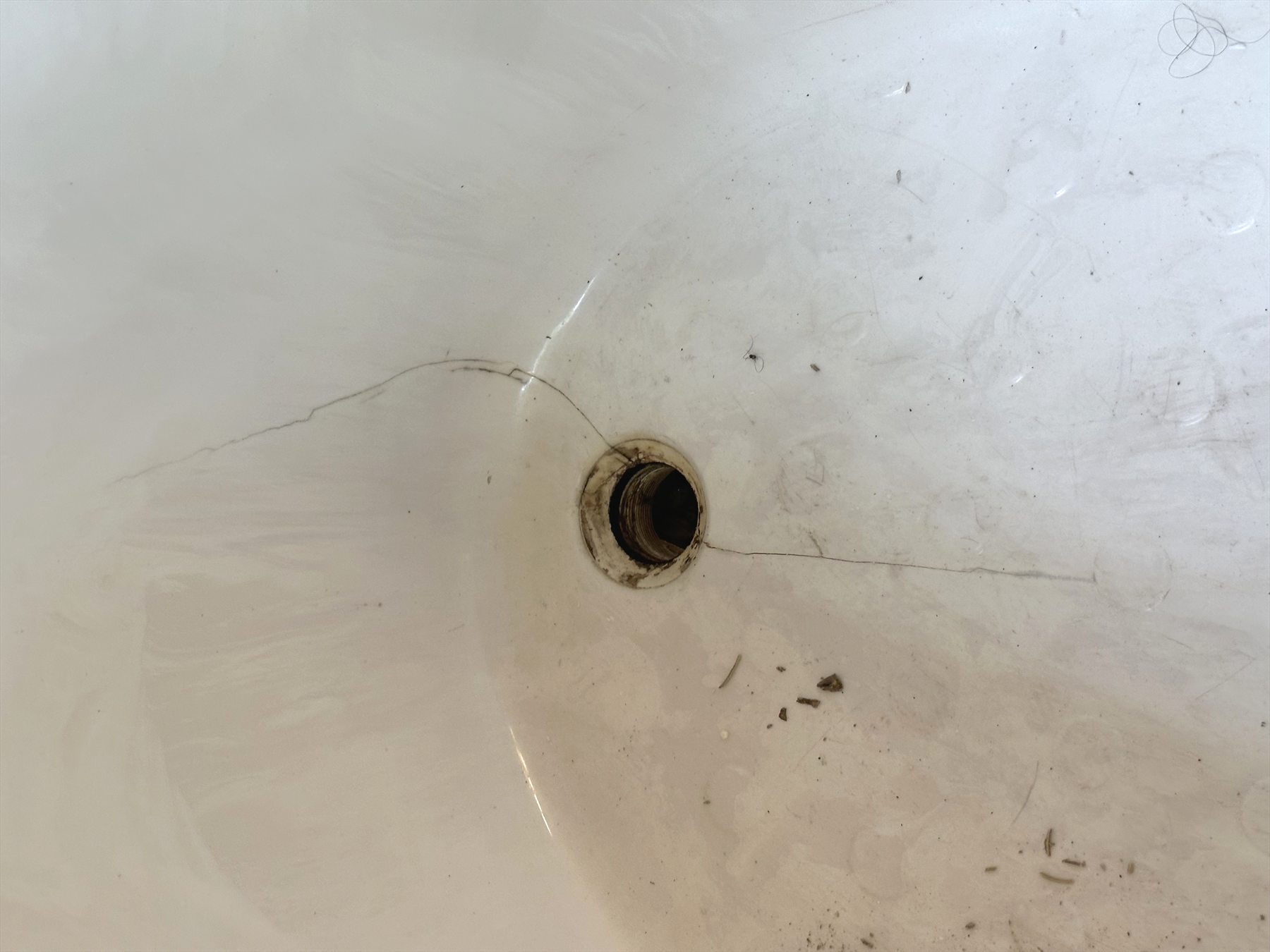
This photo shows a cracked cultured marble tub near the drain. Fiberglass, acrylic, and cultured marble cracks all need material-specific review before repair or replacement is recommended.
A cracked bathtub makes people nervous for a good reason.
A stain is annoying. A chip is ugly. Rust looks bad. But a crack feels different because it raises bigger questions. Is water getting through? Is the tub flexing? Is the floor underneath soft? Can the tub be repaired, or does the whole thing need to be replaced?
For Austin homeowners, property managers, realtors, landlords, apartment maintenance teams, and renovation companies, a cracked fiberglass or acrylic tub should be reviewed before anyone guesses at the answer. Some cracks can be repaired. Some need tub crack repair before refinishing. Some cracks are warning signs that the tub has movement or support problems. Some cracks may mean replacement is the safer call.
The tricky part is that cracks do not all mean the same thing. A small crack on the side wall of a fiberglass tub is different from a crack across the tub floor. A hairline crack near the drain is different from a crack with a soft spot underneath. A crack in an acrylic tub is different from a chip in an older porcelain tub. A shower pan crack can be a different issue than a bathtub wall crack.
That is why cracked fiberglass tub repair in Austin should start with the surface condition, not just the keyword. A customer may search for fiberglass tub repair in Austin, bathtub crack repair in Austin, acrylic tub repair in Austin, shower pan repair, or showerpan repair, but the real question is the same: what is damaged, how stable is it, and what needs to happen next?
This guide focuses mostly on fiberglass and acrylic tub cracks, but the same first-step review also applies to cultured marble repair. A cultured marble crack near the drain, like the photo above, should be checked for crack location, surrounding movement, drain-area stress, and whether water may be getting into the damaged area.
Table of Contents
- The Short Answer
- Why Fiberglass and Acrylic Tubs Crack
- The Difference Between a Surface Crack and a Structural Crack
- Where the Crack Is Matters
- Soft Spots, Flexing, and Movement
- Tub Crack Repair vs Bathtub Replacement
- When Bathtub Refinishing Helps After Crack Repair
- Chips, Rust, Caulk, and Shower Pan Damage to Check at the Same Time
- Homeowners: What to Do When You First Notice a Crack
- Property Managers and Realtors: Why Cracks Should Be Reviewed Early
- Austin, Cedar Park, Round Rock, Pflugerville, Manor, and Nearby Areas
- Final Photo Checklist
- FAQ
The Short Answer
A cracked fiberglass tub may be repairable if the damage is localized, the area is stable, and there is no major flexing, active leaking, or deeper structural problem.
That does not mean every crack can be fixed with a simple patch. A crack needs to be reviewed based on where it is, how big it is, whether the tub moves, whether the floor feels soft, and whether water may be getting through. The tub material matters too. Fiberglass, acrylic, porcelain, steel, and cast iron tubs all have different repair concerns.
For fiberglass and acrylic tubs, the biggest concern is movement. If the tub flexes every time someone steps in, the surface repair may not hold the way it should. If the crack is on the tub floor, around the drain, or in an area with a soft spot, that needs closer review. If the crack is on a side wall and the surface is stable, repair may be more realistic.
Tub crack repair is often just one part of the plan. The tub may also need bathtub refinishing if the finish is worn, stained, or damaged. If there are chips, those may need tub chip repair. If there is rust around metal components or a different tub material, tub rust repair may be part of the conversation. If the caulk lines are old or failing, recaulking can help the finished area look cleaner.
The goal is not to make every cracked tub sound repairable. The goal is to figure out whether repair makes sense before replacement money is spent.
Why Fiberglass and Acrylic Tubs Crack
Fiberglass and acrylic tubs are common because they are lighter than cast iron, easier to install, and often used in homes, apartments, condos, rentals, and remodels. They can work well for years, but they are not immune to damage.
One common cause is movement. If the tub was not supported correctly underneath, the floor may flex over time. That repeated movement can stress the surface and lead to cracking. A small flexing issue can become more noticeable as the tub ages or gets heavy daily use.
Impact is another common cause. A dropped shower head, tool, bottle, or heavy object can chip or crack the surface. In rental properties, this is especially common because the bathroom sees different tenants, cleaning habits, and levels of care.
Age and wear can also play a role. Over time, the surface of a fiberglass or acrylic tub may dull, thin, discolor, or weaken in high-use areas. The tub floor, drain area, and front apron often take the most abuse.
Cleaning products can contribute too. Harsh cleaners, abrasive pads, and repeated scrubbing can damage the finish. Once the surface is worn, it may become easier for cracks, chips, stains, and peeling to show.
Installation issues can also show up later. A tub may look fine when installed, but if the base does not have enough support, movement may eventually create cracks or soft spots. This is one reason a crack on the tub floor needs to be taken more seriously than a small surface mark.
For Austin property managers, this matters because rental tubs may get heavy use between tenants. For homeowners, it matters because the tub may have been installed years before they ever noticed the issue. For renovation companies, it matters because a tub that looks fine at first glance may have underlying flex that changes the repair plan.
The Difference Between a Surface Crack and a Structural Crack
Not all cracks carry the same level of risk. A surface crack may be shallow and localized. It may not move when pressed. It may not be near the drain or tub floor. It may be more of a finish or outer-layer issue than a sign that the tub is failing.
A structural crack is more serious. It may go deeper, spread over time, move when weight is applied, or appear in an area that carries weight. It may be connected to a soft spot, flexing, poor support, or water intrusion.
The problem is that a homeowner cannot always tell the difference just by looking. That is why tub crack repair should start with questions like:
- Where is the crack?
- How long has it been there?
- Is it getting bigger?
- Does the area move when stepped on or pressed?
- Is there a soft spot?
- Is it near the drain?
- Has water been getting through?
- Has the tub been repaired or refinished before?
- Is the tub fiberglass, acrylic, porcelain, steel, or cast iron?
If you are searching for bathtub crack repair in Austin, the best first step is to send photos and describe what you feel underfoot. A photo can show the crack, but it cannot always show flexing or softness.
For property managers, this is important during move-outs. A tenant may report a crack in the tub, but the manager should try to document whether the crack is on the floor, side wall, apron, or drain area. That detail helps determine urgency.
Where the Crack Is Matters
The location of the crack says a lot about the possible repair path.
Tub floor cracks
Cracks on the tub floor need careful review because that area carries weight. If the tub floor flexes, moves, or feels soft, the crack may be connected to support issues underneath. Repair may still be possible in some cases, but stability matters. A finish applied over a moving crack may fail later, so the floor area should be checked before assuming bathtub refinishing will solve the problem.
Drain-area cracks
Cracks near the drain are important because the drain area sees water constantly. If water gets through the crack, the issue can become more serious. Drain-area cracks may also be harder to ignore because they are highly visible and high-use.
Side wall cracks
Side wall cracks may be more repairable if the surface is stable and not taking heavy weight. The size, depth, and cause still matter, but side wall cracks are often different from floor cracks. A side wall crack caused by impact may be a better candidate for localized repair than a crack caused by movement.
Front apron cracks
The front apron of the tub can crack from impact, stress, or movement. These cracks may not always affect bathing function, but they can make the bathroom look damaged. For listings and rentals, apron cracks can stand out because they are visible as soon as someone enters the bathroom.
Corner and edge cracks
Cracks along edges, corners, or caulk lines may be connected to movement, old caulk, or water exposure. Recaulking may be needed, but caulk alone is not a crack repair. The damaged surface still needs to be reviewed.
Shower pan cracks
A shower pan crack is related but not exactly the same as a tub crack. Shower floors take constant foot traffic and water exposure. Shower pan repair may be worth reviewing when the base is stable and the damage is localized. If the shower pan has major movement or leaks, replacement may be needed.
Soft Spots, Flexing, and Movement
Soft spots and flexing are the details that can change the entire repair recommendation. A crack in a stable area may be repairable. A crack in an area that moves every time someone steps on it is more complicated. Movement puts stress on the repair and finish. If that movement is not addressed, the crack may come back or the coating may fail.
Soft spots can feel like the tub floor sinks slightly, bends, or gives under pressure. Sometimes the movement is obvious. Other times it is subtle. Either way, it should be mentioned before scheduling repair.
For fiberglass and acrylic tubs, support underneath the tub matters. If the tub was not supported well during installation, repeated use can create stress over time. That stress can show up as cracks, squeaking, flexing, or soft areas.
This is why fiberglass tub repair in Austin is not just a cosmetic search. A fiberglass crack may require more than surface patching. The repair approach depends on the crack, the stability, the material, and the use of the bathroom.
For rentals, this is especially important. A tub may have been used by multiple tenants over many years. If the floor is flexing, patching the visible crack may not be enough. The manager needs to know whether the tub is stable enough to repair or whether replacement should be considered.
Tub Crack Repair vs Bathtub Replacement
The big question is always the same: repair or replace?
Tub crack repair may make sense when:
- The crack is localized.
- The tub is stable.
- There is no major flexing.
- There is no active leaking.
- The damage is not spreading.
- The surrounding surface is still usable.
- The owner wants to avoid unnecessary demolition.
- The bathroom is not already being fully remodeled.
Replacement may make more sense when:
- The tub floor flexes heavily.
- The crack is large or spreading.
- The area feels soft.
- Water is getting through.
- There are multiple cracks.
- The tub has structural failure.
- Previous repairs have failed.
- The bathroom is already being torn out.
- The owner wants a different tub, shower, or layout.
Replacement can be the right decision, but it can also become a bigger project than expected. Removing a tub can affect tile, flooring, plumbing, trim, paint, walls, and scheduling. For a homeowner, that can turn a crack into a full remodel. For a property manager, that can extend downtime. For a realtor, that can delay listing prep. For an investor, that can stretch the budget.
Repair can be a smart option when the tub is still worth saving, but it should not be treated like a shortcut. The crack needs to be reviewed honestly. If the surface is moving or the damage is too deep, replacement may be safer.
When Bathtub Refinishing Helps After Crack Repair
Crack repair and bathtub refinishing are related, but they are not the same thing. Tub crack repair focuses on the damaged area. Bathtub refinishing focuses on the overall surface appearance. In many cases, the two may work together. After a crack is repaired, the tub may still look stained, dull, worn, or mismatched. Refinishing can help create a cleaner, more uniform look when the tub is a good candidate.
Bathtub refinishing Austin TX may be helpful after crack repair when:
- The tub finish is worn or stained.
- The repaired area needs to blend better.
- The tub color is dated.
- The surface has multiple cosmetic issues.
- The bathroom is being prepared for a rental, sale, or renovation.
- The tub is stable enough for refinishing.
This matters for realtors and property managers because a repaired crack alone may not make the tub look rent-ready or photo-ready. If the rest of the tub is yellowed, dull, or stained, refinishing may be part of the bigger refresh.
Refinishing should not be used to hide a crack that has not been addressed. If the tub is cracked, the crack needs review before refinishing. If there is movement, that movement matters. If the surface is unstable, refinishing alone is not the solution.
Chips, Rust, Caulk, and Shower Pan Damage to Check at the Same Time
When a tub has a crack, it is worth checking the rest of the wet area too. A cracked tub may not be the only issue in the bathroom. There may be chips, rust, peeling coating, old caulk, worn shower walls, dated tile, or shower pan damage that should be reviewed at the same time.
Tub chip repair may be needed if there are impact marks around the rim, apron, or drain area. Chips can collect grime and make the tub look damaged even if the crack is the main concern.
Tub rust repair may be needed on older porcelain, steel, or cast iron tubs. While fiberglass and acrylic tubs do not rust the same way, metal components, drains, or other tub types can show rust that affects the repair plan.
Recaulking may be needed if the caulk lines are stained, cracked, missing, or pulling away. Old caulk can make the bathroom look dirty and may allow water into places it should not be.
Shower pan repair may be needed if the shower floor is cracked, stained, worn, or soft. If you are already reviewing a cracked tub in one bathroom, it makes sense to check the shower surface too, especially in rentals, multi-bath homes, or properties being prepared for sale. Shower refinishing or tile refinishing may also be worth considering when the surrounding surfaces are worn, dull, or dated.
Homeowners: What to Do When You First Notice a Crack
If you notice a crack in your fiberglass or acrylic tub, do not start by scrubbing it, painting over it, or filling it with a random product. Start by observing it.
Look at where the crack is located. Is it on the tub floor, side wall, apron, edge, or near the drain? Does the crack look like it is spreading? Does the area move when you step near it? Does it feel soft? Is there water getting through? Has the tub been repaired before?
Then take photos. Take one full photo of the tub so the overall surface can be seen. Take close-ups of the crack from a few angles. Include the drain area if the crack is nearby. If there are chips, rust, peeling, or old caulk, photograph those too.
Avoid using harsh cleaners or abrasive pads on the crack. That can make the surface worse. Avoid using the tub heavily if you think water is getting through or if the floor feels unstable.
For homeowners, the goal is to catch the issue before it becomes larger. A small crack may be easier to review than a crack that has spread over time. If the tub is stable, repair may be possible. If the tub is moving, the repair plan may change.
Property Managers and Realtors: Why Cracks Should Be Reviewed Early
For property managers, a cracked tub should be part of the move-out and make-ready checklist. Do not wait for the next tenant to report it. A crack that is visible during turnover should be photographed and reviewed before the unit is listed or occupied. That is especially true if the crack is on the floor, near the drain, or connected to soft spots.
For realtors, a cracked tub should be checked before listing photos. Even if the crack is small, buyers may notice it during showings or inspection. A visible crack can make the bathroom feel risky because buyers may worry about water damage or replacement cost.
For renovation companies, cracks should be reviewed before planning around the existing tub. If the tub is staying in place during a light renovation, the surface needs to be stable enough to keep. If the crack is too serious, the scope may need to change.
Early review helps everyone avoid surprises. A property manager can avoid tenant complaints. A realtor can avoid last-minute listing stress. A homeowner can avoid guessing. A renovation company can avoid finishing around a failing fixture.
Austin, Cedar Park, Round Rock, Pflugerville, Manor, and Nearby Areas
Texas Bathtub & Tile Refinishing helps with bathtub repair, bathtub refinishing, fiberglass tub repair, acrylic bathtub repair, cultured marble repair, shower pan repair, shower refinishing, tile refinishing, recaulking, and bath and shower restoration in Austin TX and surrounding Central Texas areas.
Common service areas include Austin, Manor, Round Rock, Pflugerville, Cedar Park, Georgetown, Leander, Buda, San Marcos, New Braunfels, and nearby communities. See the full service area list for more local pages.
Cracked fiberglass and acrylic tubs are common in homes, condos, apartments, rentals, and remodels across the Austin area. A homeowner in Austin may notice a crack near the drain. A property manager in Manor may find a cracked tub during turnover. A realtor in Pflugerville may need a tub reviewed before listing photos. A homeowner searching for shower refinishing Cedar Park may also need a cracked shower pan reviewed.
Someone searching for fiberglass tub repair in Austin may have a floor crack, side wall crack, chip, or soft spot. Someone searching for acrylic tub repair in Austin may have a crack that needs review before refinishing. Someone searching for porcelain bathtub repair in Austin may actually have a chip or rust issue instead of a fiberglass crack.
Final Photo Checklist
If your tub is cracked, the best first step is to send clear photos and a few details.
Send:
- One full photo of the bathroom.
- One full photo of the tub.
- Close-ups of the crack.
- A photo showing where the crack is located.
- A photo of the drain area.
- Photos of chips, rust, peeling, stains, or old caulk.
- A note about whether the area feels soft or flexes.
- A note about whether the crack is growing.
- A note about whether this is a home, rental, listing, or renovation project.
- Your Austin-area city or neighborhood.
Texas Bathtub & Tile Refinishing can help you figure out whether the project looks like tub crack repair, bathtub repair Austin, fiberglass tub repair, acrylic tub repair, bathtub refinishing Austin TX, shower pan repair, shower refinishing, recaulking, or replacement.
FAQ
Can a cracked fiberglass tub be repaired?
Some cracked fiberglass tubs can be repaired if the damage is localized and the tub is stable. The location of the crack, the amount of movement, and whether there are soft spots all matter.
When is a cracked tub too far gone?
A cracked tub may be too far gone when the floor flexes heavily, the area feels soft, water is getting through, the crack is large or spreading, or previous repairs have failed.
Do you offer fiberglass tub repair in Austin?
Texas Bathtub & Tile Refinishing serves Austin and surrounding Central Texas areas. If you are searching for fiberglass tub repair in Austin, send photos of the crack, chip, soft spot, or damaged area along with one full photo of the tub.
Do you offer bathtub crack repair in Austin?
Yes, bathtub cracks can be reviewed for repair in the Austin area. Tub crack repair may be possible when the damage is localized and the tub is stable.
Can an acrylic tub crack be repaired?
Some acrylic tub cracks can be repaired, but the repair depends on the location, depth, and movement. Acrylic tubs should be reviewed carefully because movement or poor support can affect whether the repair will hold.
Should a cracked tub be refinished after repair?
A cracked tub may need bathtub refinishing after repair if the overall surface is worn, stained, discolored, or if the repaired area needs to blend better. Refinishing should not be used to cover an unrepaired crack.
Is a crack near the drain serious?
A crack near the drain should be reviewed carefully because that area sees constant water exposure. If water gets through the crack, the issue may become more serious.
What does a soft spot in a fiberglass tub mean?
A soft spot usually means the tub surface or support underneath is moving. This can make crack repair more complicated because movement puts stress on the repair.
Can tub chip repair be done at the same time as crack repair?
Tub chip repair may be done as part of the same surface review, depending on the tub material and damage. If there are both chips and cracks, send photos of each area so the repair plan can be reviewed together.
Can tub rust repair be part of bathtub repair?
Tub rust repair can be part of bathtub repair for tubs where rust is present, especially older porcelain, steel, or cast iron tubs. The depth and location of the rust matter before refinishing.
Is shower pan repair the same as tub crack repair?
Shower pan repair and tub crack repair are related surface services, but they are not the same. A shower pan is the floor of a shower, while tub crack repair deals with cracks in a bathtub.
Do you offer shower refinishing Cedar Park?
Texas Bathtub & Tile Refinishing serves Cedar Park and nearby Central Texas areas. Shower refinishing Cedar Park may be a good option when the shower surface is worn, stained, dull, or dated but still stable enough to refinish.
Related Texas Bathtub & Tile Refinishing Pages
- Bathtub Repair in Austin
- Bathtub Refinishing in Austin
- Fiberglass Tub Repair
- Acrylic Bathtub Repair
- Cultured Marble Repair
- Shower Pan Repair
- Shower Refinishing
- Tile Refinishing
- Austin Service Area
- Cedar Park Service Area
- Round Rock Service Area
- All Service Areas
- Material Guide
- 5 Year Warranty
Get a Cracked Tub Repair Quote
If your fiberglass or acrylic tub has a crack, soft spot, chip, drain-area problem, worn finish, or old caulk, Texas Bathtub & Tile Refinishing can review photos and help decide whether repair, refinishing, recaulking, shower pan repair, or replacement makes sense. Send photos for a fast quote.